List of my selected projects.
Research project: Family in modernising east-central Europe.
Public project: IndexingRoots; ReHerit: Common Responsibility for Shared Heritage.
Family in modernising east-central Europe. A historical data-driven perspective (2024–2026)
Role: principal investigator and team manager.
Interdisciplinary project integrating social sciences, demography and history with digital humanities methods. Drawing on novel datasets, machine learning and statistics, the project traces the formation of the family in East Central Europe from the eighteenth century to the early twentieth century, focusing particularly on regional cultural diversity. The research challenges the concept of “Eastern European Jewry” and “tradition” vs “modernization” approach revealing that, despite shared origin and basic cultural background, Jews developed several different demographic populations in the region. Over the course of the nineteenth century, these populations underwent various modernization scenarios.
The project involved management of the coding, standardizing and quality check processes performed by a team of four specialist.
The research has been supported by the EU Economic Recovery and Resilience Plan “New Generation Lithuania” implemented through Central Project Management Agency, grant No. 10- 036-T-0007.

Research outcome:
- Journal article: Tomasz M. Jankowski, “Mapping the Jewish Family in East-Central Europe. Diversity, Unity and in-Law Equality,” The History of the Family, 2025, 1–33, https://doi.org/10.1080/1081602x.2025.2549328.
- Journal article: Tomasz M. Jankowski, “Control and Resistance. Early Census Taking of the Jews in East-Central Europe,” Jewish Quarterly Review (in press, 2026).
- Database: Tomasz Jankowski, “Courland Census Microdata, 1803–1804,” with Felix Köther et al., Staatsbibliothek zu Berlin – Preußischer Kulturbesitz, December 18, 2024, https://doi.org/10.57882/20241218-000.
- Database: Tomasz M. Jankowski, “The 1897 census microdata of Lithuania,” National Open Access Research Data Archive (MIDAS), October 9, 2025, https://doi.org/10.18279/MIDAS.26410
- and more coming soon.

IndexingRoots (2017–2021)
Role: founder, conceptual development and team management.
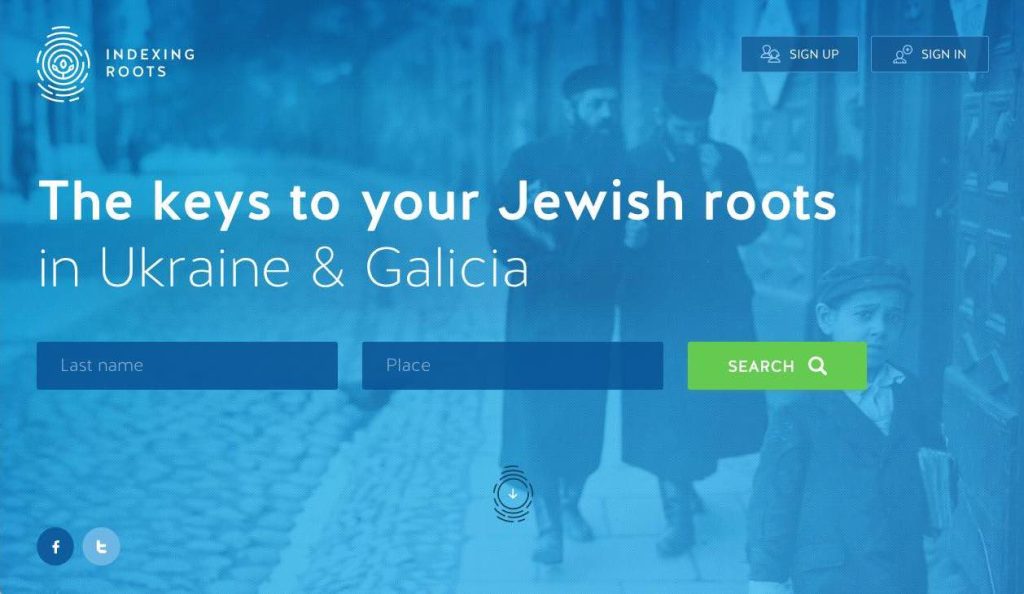
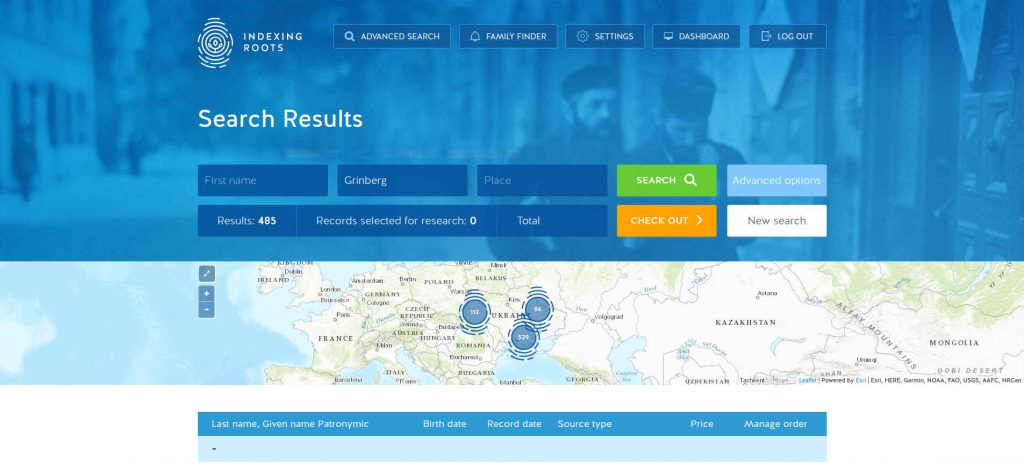
I created IndexingRoots as a private initiative to make historical and genealogical research quick and convenient. It was an online repository of name indexes to census records held in Ukrainian archives that were not available digitally at the time. This pioneering project integrated sophisticated IT solutions, such as phonetic searches, mapped results, a sleek and user-friendly design, and an entire team of historians working in archives across Ukraine.
The project has been suspended due to Covid-related limitations introduced in the archives and, consequently, the onset of the full-scale Russian war on Ukraine.
ReHerit: Common Responsibility for Shared Heritage (2018–2021)
Role: external advisor, author, multimedia editor
ReHerit: Common Responsibility for Shared Heritage is a project run by the Center for Urban History in Lviv aiming at re-thinking of the urban heritage in Ukraine. One of the ReHerit team’s tasks was to prepare an interactive educational program to broaden the knowledge of World War II among Lviv tour guides, local residents and tourists and to seekan inclusive narrative of war experiences. The project addressed the segmentation of local memory to “Polish”, “Ukrainian” and “Jewish” perspectives through placing them in broader social, transnational and transethnic context.
As I wrote in the introduction:
Perhaps what united Europe most after the war was not memory, but rather mis-memory of its most difficult aspects—collaboration with Nazi Germany, the Holocaust, and the anti-Semitic views of part of the civilian population. In addition, after the fall of the Iron Curtain, the countries that had been behind it were united by a desire to forget about the local sources of communism and to perceive it purely as a foreign, hostile idea. (…) The authors see Lviv as an arena where the problems of collaboration, the Holocaust, or the experience of communism cannot be reduced to simplistic divisions formed by Soviet or nationalist narratives (Poles-Ukrainians-Jews, communism-anti-communism, local-foreign). This is not because they downplay the existence of national or ideological differences, but because they do not consider these differences to be the only factor that determined people’s behavior. Social and economic position, religious traditions, and the political context before the war were no less important factors influencing behavior during the war. Accordingly, Lviv is seen not as an isolated island, but as part of the European continent, which is troubled by similar problems of forgetting, where the global is intertwined with the local.”
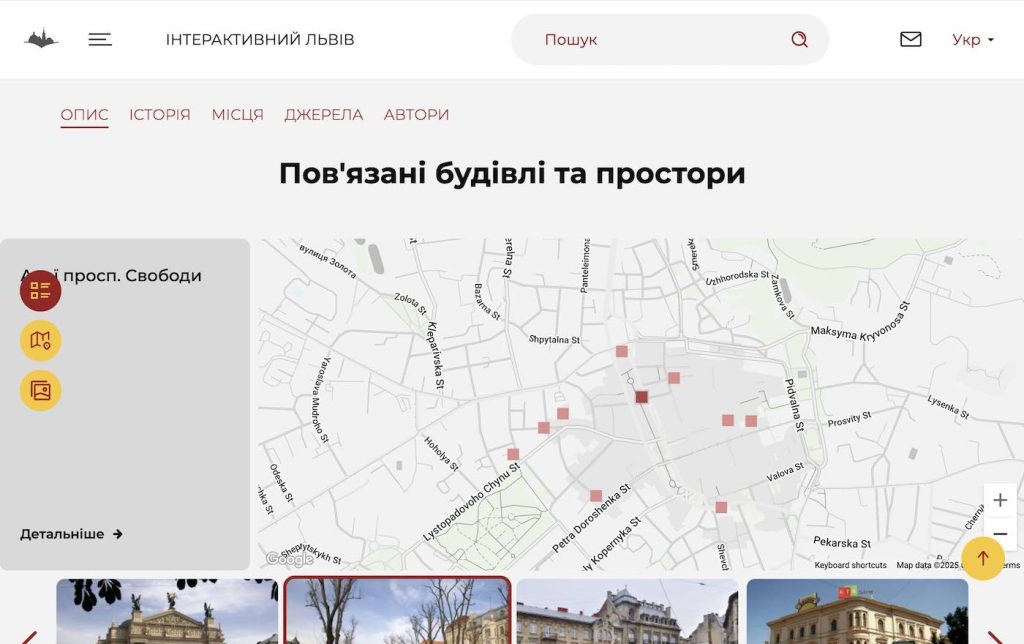
Six major challenging themes were created — Soviet occupation (1939–1941), Topography of the Holocaust, Collaborationism, Genocide next door, The End of War — and integrated with the Center for Urban History’s flagship Interactive Lviv portal. Each theme blends introductory text with maps and visuals allowing readers to gradually immerse themselves in the subject by exploring urban spaces, biographies, and selected institutions.